Short on Outdoor Space? Can a Sanden Heat Pump Tank Go Indoors?
23 November 2026
Oregan Air Conditioning explains Sanden heat pump placement for Sydney homes, including when a storage tank may be installed safely inside the home.
Limited side access can make a standard outdoor hot-water layout difficult for compact Sydney properties. Sanden heat pump placement offers flexibility because the system separates the storage tank from the heat pump unit. The tank can potentially sit indoors, but the outdoor component, drainage, pipe route and service access must still be assessed before installation.
Can a Sanden Heat Pump Tank Be Installed Indoors?
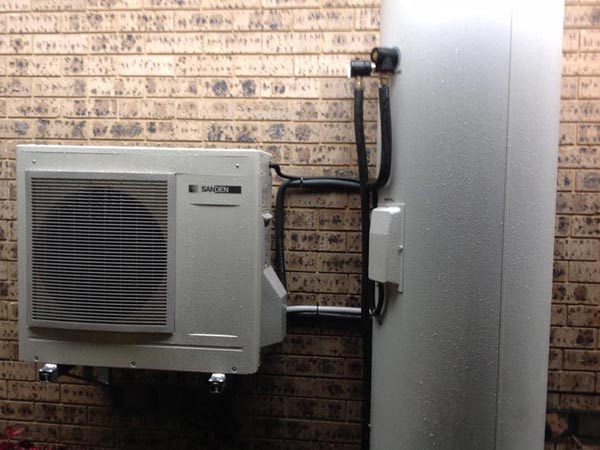
Yes, you can install the Sanden storage tank indoors, while the separate heat pump unit must remain outside. Sanden’s split arrangement allows the tank and outdoor unit to occupy different positions, which can help where a home has limited external space.
A garage, laundry or purpose-designed utility area may suit the tank if the location meets installation requirements. A sealed cupboard or cramped recess is not automatically acceptable because the tank still needs suitable support, compliant drainage and room for inspection, valves, pipework and eventual replacement. Our Sanden hot-water service provides more information about the system offered for Sydney homes.
What Must an Indoor Tank Location Provide?
An internal position must protect the building while safely supporting the weight of a filled tank. The NSW guidance for heat pump installations directs installers to the requirements for concealed and unconcealed internal storage tanks under AS/NZS 3500.4.
Important site checks include:
- Stable support: A level base or structure must carry the tank and stored water.
- Leak management: Drainage provisions must limit property damage if water escapes.
- Relief-valve drainage: The drain must fall continuously to a safe, visible discharge point and must not empty into a safe tray.
- Service access: Valves, connections, and serviceable parts must remain reachable.
- Pipe routing: The connection between the tank and outdoor unit must be practical and appropriately insulated.
These requirements make a site inspection more useful than selecting a location from measurements alone. Confirm indoor placement against the proposed model and the property’s conditions.
How Much Indoor and Outdoor Space Is Required?
The outdoor unit needs good airflow, proper clearances, drainage and service access. Sanden tanks range from 160 to 315 litres, with diameters of 580 or 621 mm depending on the model. Allow extra space for valves, pipes and maintenance rather than relying on tank diameter alone.
Sanden states that the split configuration can allow up to 15 metres of horizontal separation or 5 metres vertically between the components. A shorter route is preferable because additional pipework can increase installation complexity and the potential for heat loss. Homeowners wanting technical context can also review how the Sanden Eco system works before requesting an assessment.
Oregan Air Conditioning for Sanden Heat Pump Placement
The right arrangement balances indoor protection, outdoor airflow, household hot-water demand and future access. Oregan Air Conditioning can assess the available positions across a metropolitan Sydney property and determine if an indoor tank arrangement is practical. Confirming the model and layout first reduces the risk of obstructed servicing, unsuitable capacity or non-compliant drainage.
Contact us to request an assessment of the indoor tank position and outdoor heat pump location for your Sydney home.
Optimized by: Netwizard SEO